 800.577.6679




Warmth Worth Walking On
Hand-Knotted Rugs for Historic Homes
Every time you walk through your historic home you can feel the weight of craftsmanship and the soul that comes from things made to endure. Your floors deserve that same intention. These hand-knotted wool rugs are built to age beautifully alongside your home, developing richer character with every decade.
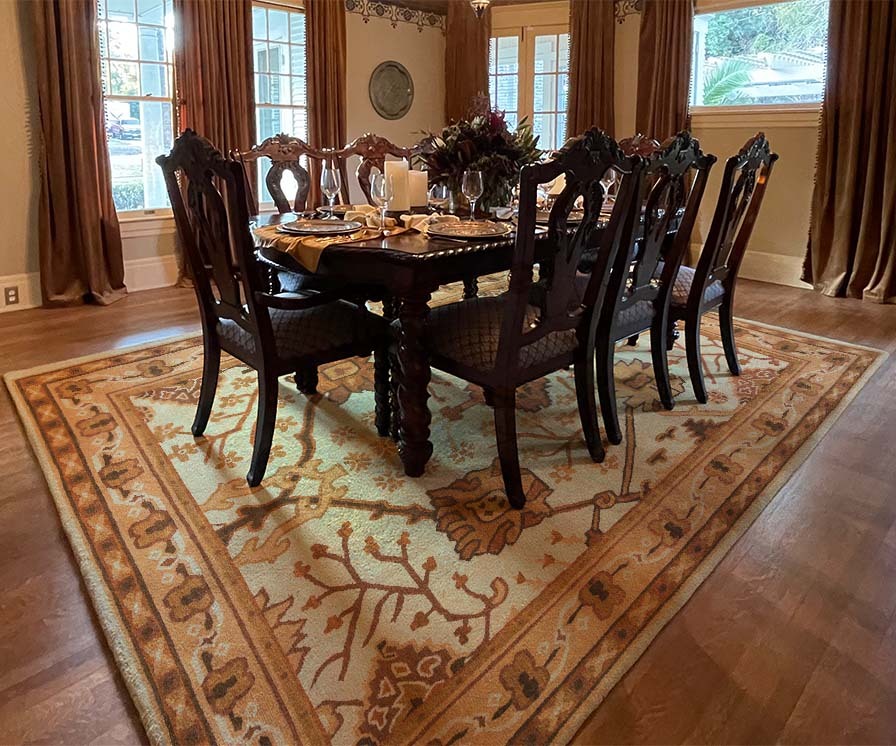
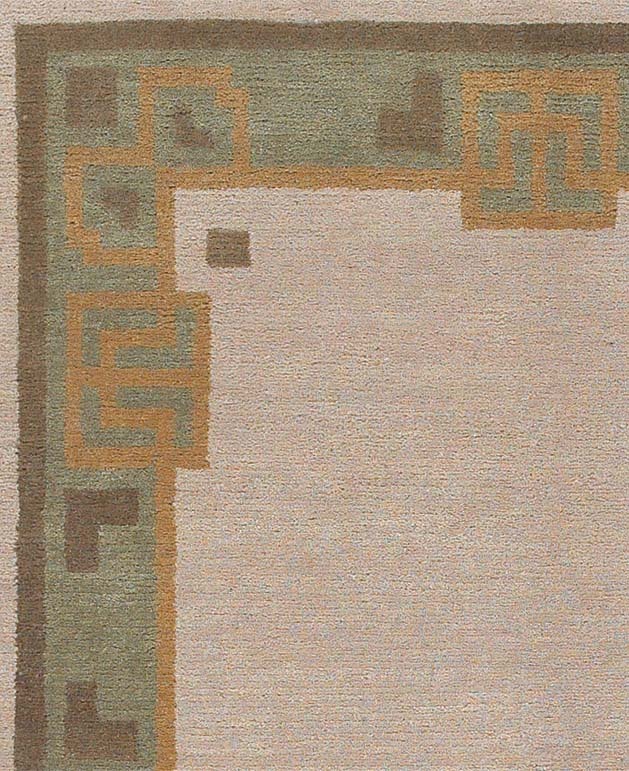
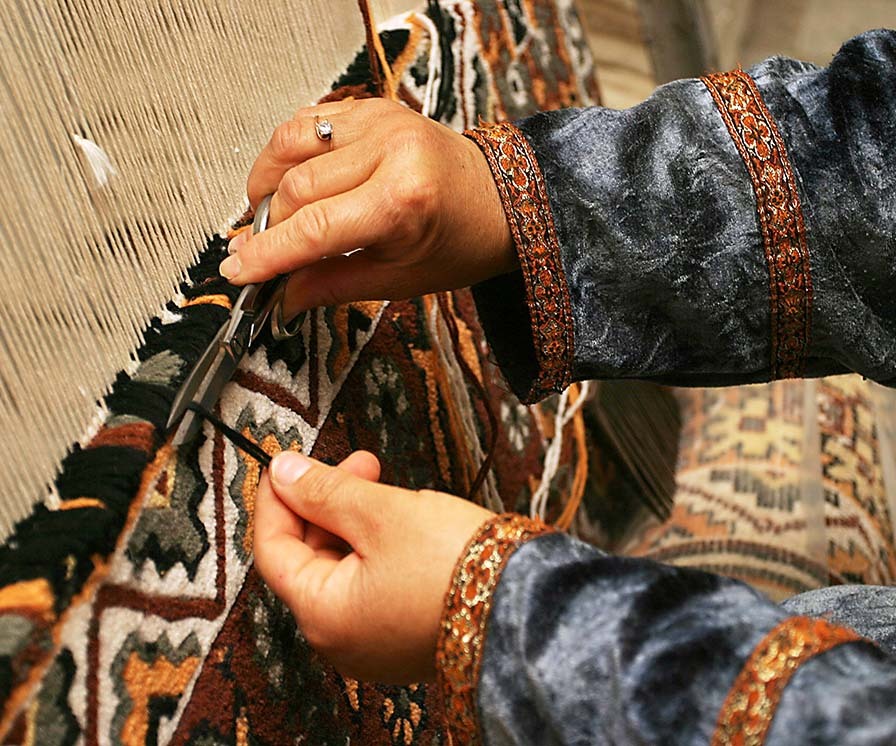
Made by Human Hands, One Knot at a Time
Picture an artisan who comes from generations of specialization spending months tying individual knots—tens of thousands of them—building your rug strand by strand. There's no machine that can replicate the subtle variations in tension, the way natural wool catches light differently in each hand-dyed section, or the character that comes from something truly crafted rather than manufactured.
This is what you're bringing into your home: proof that craftsmanship still exists. Century-old rugs didn't become coveted heirlooms overnight. They were built this same way, one knot at a time, and that journey begins in your home today.
The Difference You'll Notice
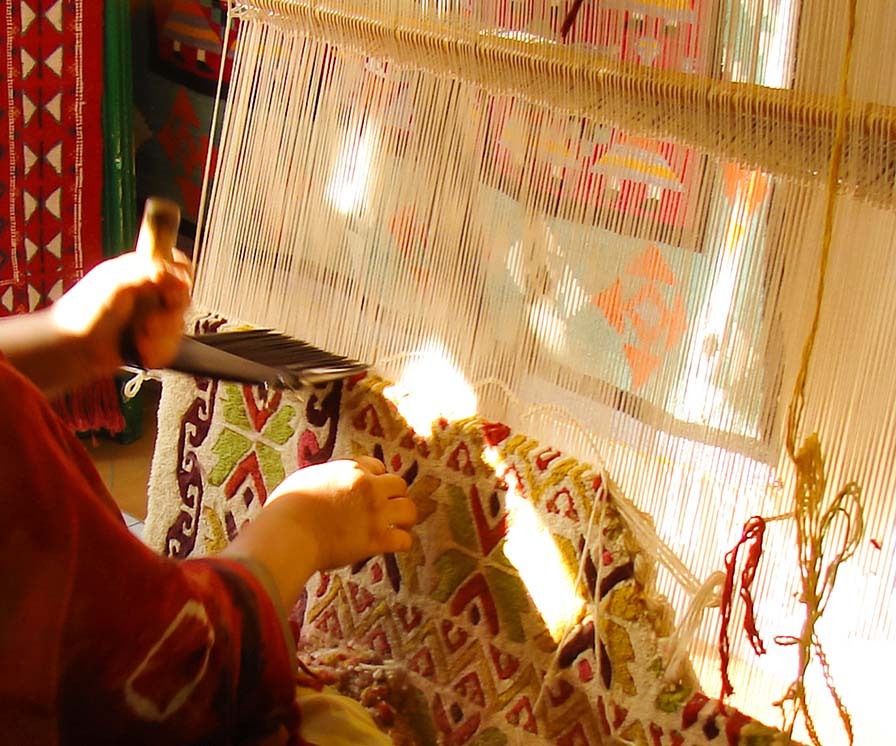
Built to Become Heirlooms
You want to make decisions you won't regret. Hand-knotted construction lasts 100+ years and can be professionally repaired when damaged—these aren't floor coverings you'll replace when you redecorate. They're investments that appreciate alongside your home, developing rich character that can't be rushed or faked.
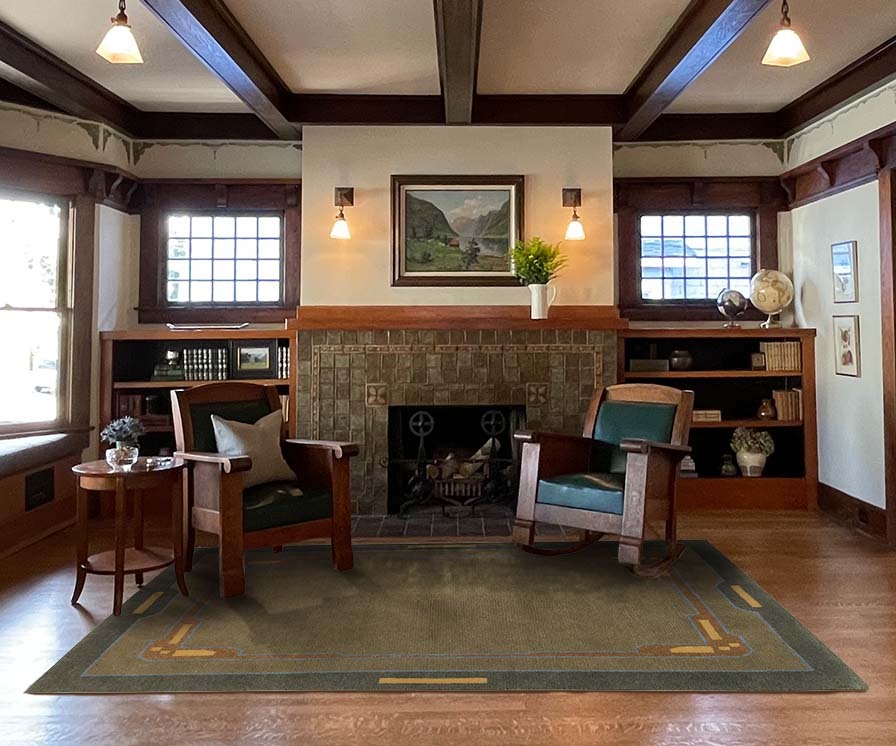
Designed for Your Home's Era
Your home speaks a specific architectural language from a specific era. These rugs are researched for period accuracy. Whether your home dates to the 1890s or 1960s, you'll find designs that honor its authentic character. Not generic ‘vintage-inspired’ styling, but patterns genuinely created for the architectural periods that matter to you.

Himalayan Wool, Hand-Dyed
The source matters. Sheep raised at high altitudes in the Himalayas produce wool with higher lanolin content, natural oils that make these rugs more resilient and dirt-resistant. Hand-dyed and hand-knotted by skilled artisans in Nepal, each rug carries the character that only comes from natural materials and human craftsmanship. You know exactly what you're bringing into your home.
Hand-Knotted Rug Highlights
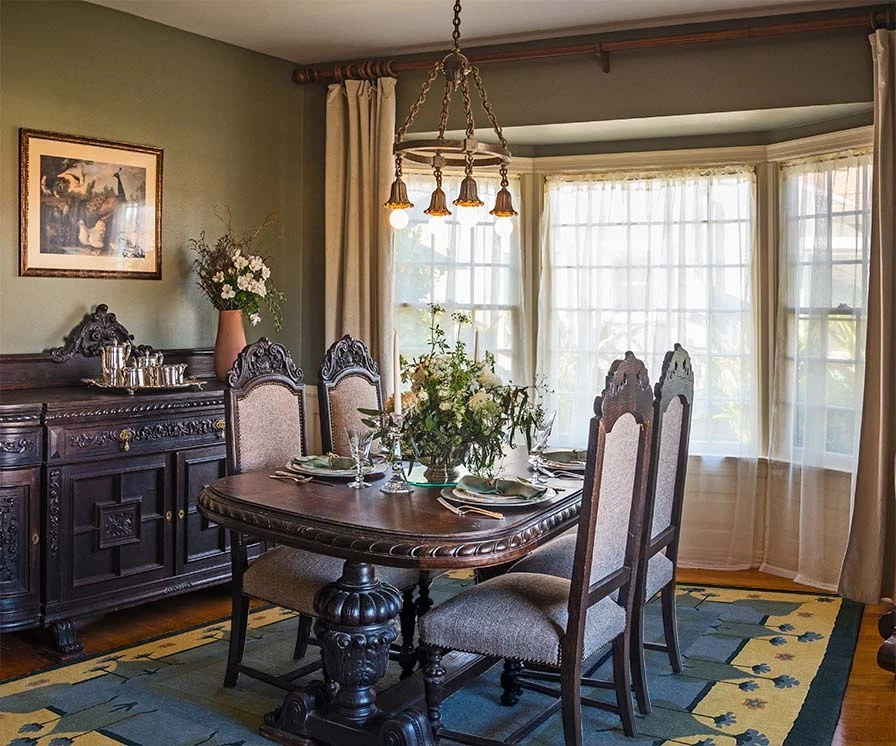
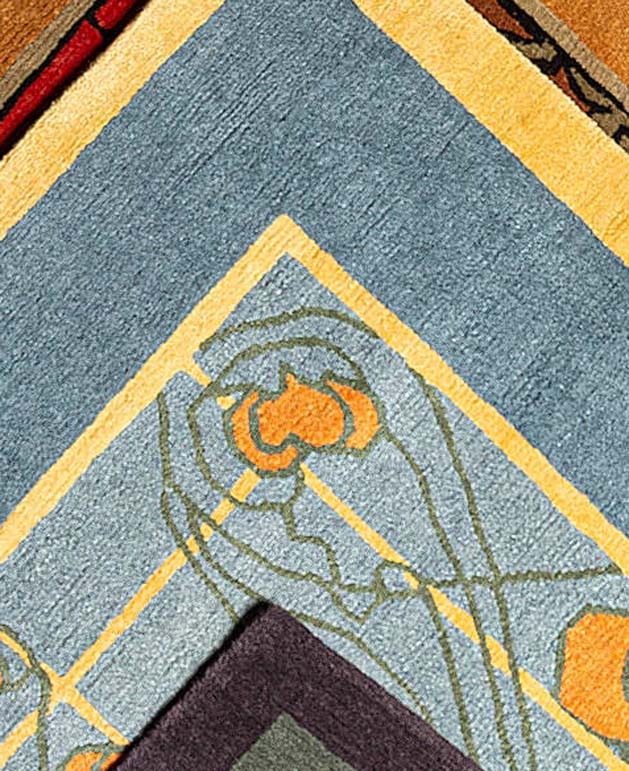
Queen Anne's Lace — Canterbury
A delicately bordered cream and blue beauty for your early 20th century home across multiple architectural styles.
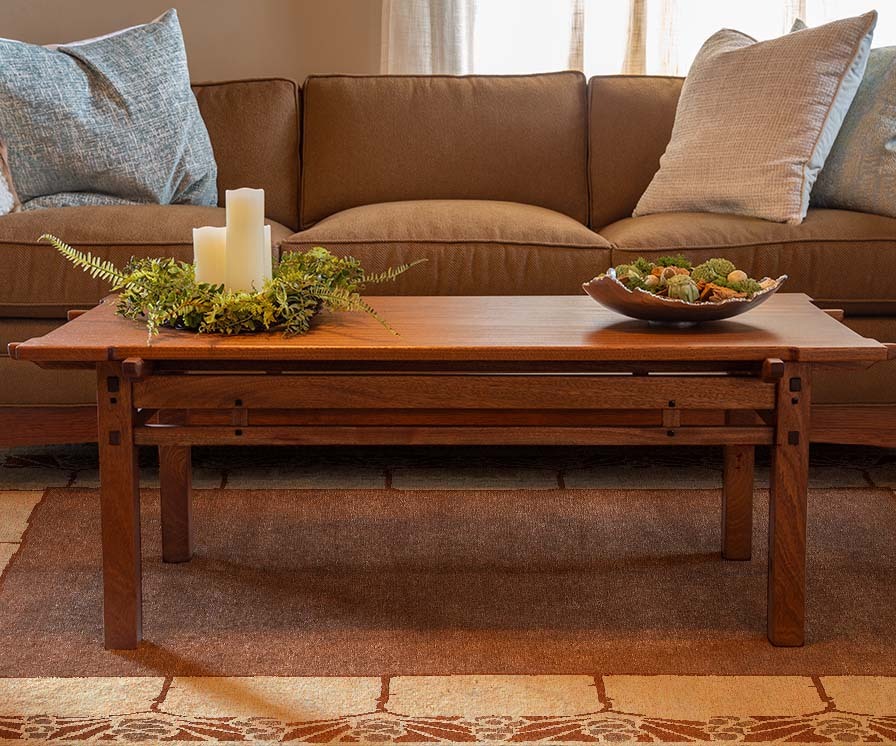
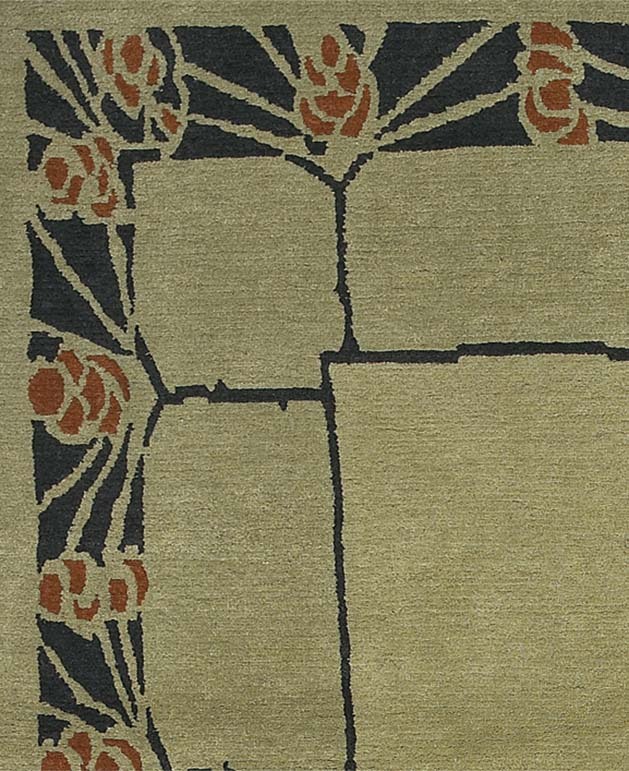
Pine Cone — Chestnut Brown
An earthy field is bordered by bold and abstracted pine cones in this Craftsman style gem.
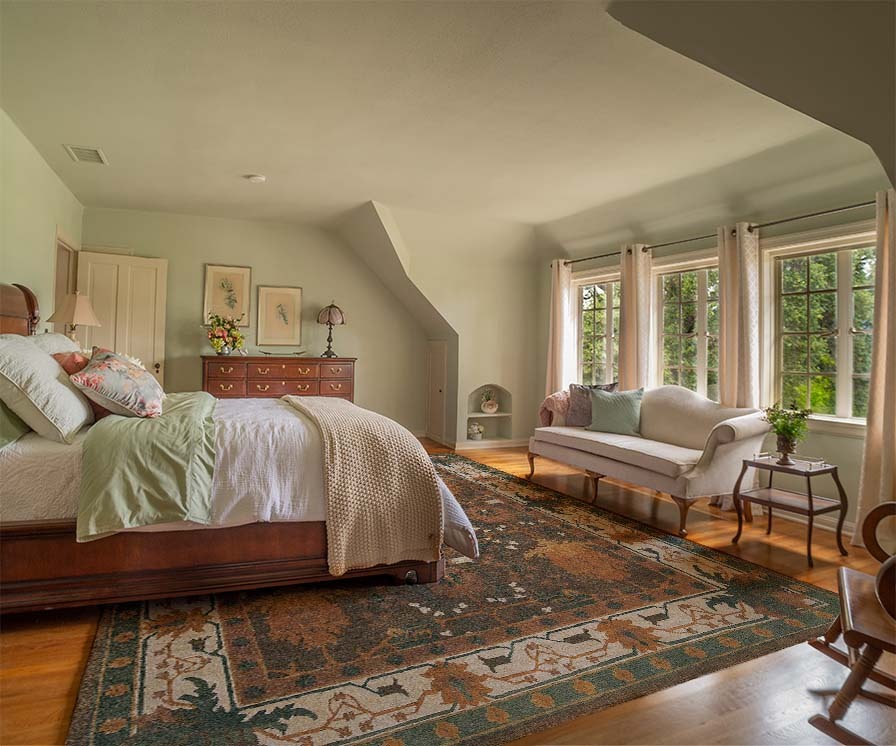
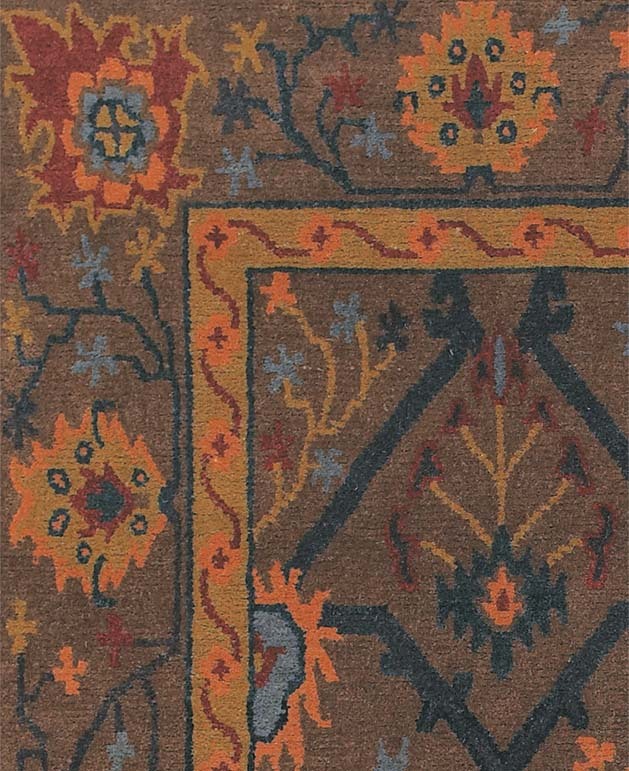
Donegal Killybegs — Cocoa
Flowers weave an intricate web across this rug perfect for Victorian homes as well as Tudor Revival and Storybook Cottage.
Frequently Asked Questions About Hand-Knotted Rugs
Timeline & Ordering
What is the process to order a rug?
- If no sample is needed, place your order. We'll still send you a 12"×18" swatch of the rug to see quality and color (though colors in the final rug will vary slightly due to the hand-dyed fibers).
- Once approved, you ship the sample back and we request a rendering of the rug in your selected size to show you any pattern changes.
- You say yes, and production starts.
Can I see samples or swatches before ordering?
Yes, we can provide samples to help you visualize colors and materials. Note that there will always be some natural variation in the hand-dyed natural colors, and all computer monitors will display the colors slightly differently. Samples are the best way to land on your final choice.
Samples cost $75 to borrow, including shipping. We will credit the price of borrowing up to two samples ($150) per rug toward any order you place.
Contact us at team@oldcalifornia.com and we'll coordinate samples for the specific rugs you're considering.
Why does my rug take so long to arrive? Can I order my rug for a specific deadline?
Your rug is being hand-knotted one knot at a time by skilled artisans. Even experienced weavers can typically complete only about three feet of rug per month.
If the rug is part of a larger remodel or restoration project, the best approach is to order early in your process. It can be one of the first purchases you make even if installation is months away. If it arrives before you're ready to install it, that's not a problem. Simply unroll your rug to remove any shipping creases, and then gently reroll it in the opposite direction so that you can store it until you're ready to place.
Occasionally, orders can be delayed by monsoon seasons. Part of the production process happens outdoors, and a heavy season can push back the workshop's queue, sometimes significantly.
If you need a rug within less than 3 months, you'll need one that's already made and in stock somewhere, which typically means machine-made options.
Materials & Construction
What's the difference between 'hand-knotted,' 'hand-tufted,' and 'machine-made'?
Hand-knotted rugs are created by tying individual yarn knots onto a foundation. This traditional method produces heirloom-quality pieces that last decades or even centuries. Hand-tufted rugs are made by punching fibers through backing material with a tufting gun and securing them with latex glue; they're partially handmade but the latex will eventually break down. Machine-made rugs are produced on power looms with minimal human involvement and are designed to be replaced eventually, not repaired. Read our full explanation of rug construction methods and how that affects what you pay.
What does 'knots per square inch' mean?
This measures how tightly your rug is woven. Count the knots vertically across one inch, multiply by the horizontal knots, and you get the KPSI (knots per square inch). Higher counts use finer yarns and allow intricate detail; lower counts use thicker yarns. Quality wool rugs typically fall between 50-120 KPSI, enough for detailed geometric patterns without sacrificing the thickness that makes them durable.
It might be counterintuitive, but the higher knot counts are a bit less resistant to some effects like dents from furniture. This is because the individual yarns are finer and don't resist pressure as strongly. If you're placing furniture on the rug you may want to opt for a lower count (50-75 KPSI) for a little extra durability.
Are hand-knotted wool rugs safe for homes with pets and children?
Yes and no, depending on your priorities and budget. Hand-knotted wool rugs are extremely durable and designed for real family life. Wool naturally resists dirt and minor spills, and the dense knotting stands up to foot traffic (including paws). However, even small spills often need professional cleaning, and sometimes pet stains can't be removed.
Style & Selection
What rug sizes work best for different room types?
Living rooms typically use 8'×10' or 9'×12' rugs that anchor furniture groupings. Dining rooms need rugs large enough for chairs to pull out while remaining on the rug—usually at least 2-3 feet beyond your table on all sides. Runners work well in hallways (typically 2 1/2'×8' to 3'×12'). Bedrooms often use smaller accent rugs (4'×6' or 5'×8') at the bedside or a larger rug (8'×10') that extends beyond the bed frame.
Care & Maintenance
Why does my new rug shed so much?
This is completely normal for the first 3-6 months. During hand-knotting, thousands of short fibers that didn't lock into knots stay in the pile. When you walk on the rug or vacuum it, these loose fibers work their way out. It can look alarming, but it's actually a sign you bought something authentic. Once the loose fibers are gone, your rug will stabilize. Machine-made rugs don't shed like this because they use different construction.
Just keep vacuuming regularly with a suction-only setting (no beater bar, which can damage hand-knotted construction). If you notice bald spots developing, that's an indication of a problem that needs professional repair.
How do I clean and maintain my wool rug?
Vacuum weekly using suction-only settings (no beater bars, which can damage hand-knotted construction). For the first six months while your rug sheds, this regular vacuuming actually helps remove loose fibers faster.
Beyond vacuuming, plan for professional cleaning every 3-5 years depending on use. High-traffic areas may need more frequent professional cleaning, roughly every 12-18 months. Professional cleaning typically costs $200-$500+ depending on rug size and soil level. Budget this as part of ownership. It's what allows these rugs to last generations.
What should I do if I spill something on my rug?
Blot immediately. Don't rub. Use a clean, absorbent cloth to soak up as much liquid as possible. Then contact a professional rug cleaner for guidance. While you can handle surface cleaning yourself, deeper stains need expert treatment to avoid damage. Wool naturally resists many stains, but improper DIY cleaning can cause more harm than the original spill. Avoid using household cleaners as they can strip the protective natural lanolin from the wool fibers.
Can hand-knotted rugs be repaired if they get damaged?
Yes, and this is one of their greatest advantages over machine-made rugs. Skilled restorers can re-knot damaged sections, replace fringe, and stabilize foundations. This repairability is what makes them generational pieces. They can actually be fixed and restored rather than thrown away when something goes wrong.
What are these uneven areas of color in my hand-knotted rug?
This is called abrash, subtle color variation that occurs when different dye lots are used during the months-long production process. It's not a defect; it's a hallmark of authentic hand-knotted construction and adds visual depth to your rug. Machine-made rugs don't have this variation because they're produced in single runs with perfectly consistent dye lots.
How do I remove indentations on the rug?
Use a clothes iron on a low to medium setting with no steam. Gently warm the fibers and fluff by hand.
Will my hand-knotted rug fade?
Eventually, yes, but this can take decades or even centuries depending on dye quality and sun exposure. The real concern is uneven fading from direct sunlight. If part of your rug sits in bright sun daily while another section stays shaded, you'll develop visible 'sun tracks' where colors look completely different.
Use UV-protective window treatments and rotate your rug every 6-12 months to encourage even fading. Neutral colors endure longest. Learn more about fading and other rug challenges in our guide to common problems you'll face with wool rugs.
Practical Concerns
How long will a hand-knotted rug last?
With proper care, 100+ years. Many antique hand-knotted rugs are still in use after a century or more. These aren't temporary floor coverings. They're investments designed to be passed down through generations. Well-maintained pieces can actually increase in value over time.
How soon do I need to place my rug after it arrives?
You don't have to install it until you're ready. However, you do need to open it and let it lay flat for a day or so to undo any crease marks from the shipping process. If you need to store it before installing, just reroll the rug, this time in the opposite direction, and place it in a safe location.
Are your rugs heavy enough to stay in place without a rug pad? Even on carpet?
You should always use a quality rug pad regardless of your flooring. Rug pads prevent shifting, protect both your rug and your floors, and add cushioning that extends your rug's life. This is especially important on carpet, where rugs can bunch and slide without proper padding, especially in the smaller sizes.
Is it easy to vacuum pet hair out of a hand-knotted rug?
Yes. The dense pile of hand-knotted wool actually releases pet hair more easily than many synthetic materials. Use your vacuum's suction-only setting and vacuum in the direction of the pile for best results.
Will my new rug have an odor when it arrives?
Many new wool rugs have a natural lanolin smell that fades within a few weeks of airing out. This is normal and indicates natural fibers. Open windows, air circulation, and time will eliminate any initial odor.
Can I use these rugs on heated floors?
Yes, but keep the temperature moderate. Excessive heat can dry out natural fibers over time. Most hand-knotted wool rugs work fine on radiant floor heating set to typical comfort levels.
Do I need to rotate my rug?
Yes, every 6-12 months. Rotation encourages even wear and fading, especially important if any section receives direct sunlight or heavier foot traffic. This simple maintenance step significantly extends your rug's life and appearance.
Pricing
Why do your rugs cost more than big-box retailers?
Big-box retailers typically sell machine-made rugs using synthetic materials or blends, produced for volume and quick replacement. Our rugs are hand-knotted using 100% wool in workshops focused on authentic period designs and generational quality. The construction methods, materials, and intended lifespan are fundamentally different. We're offering heirlooms.
We have a full guide to how costs are determined for rugs that you can read here.
Can I return or exchange a hand-knotted rug?
Orders are typically final sale because they're made specifically for you. However, if there's a manufacturing defect or damage, contact us immediately at team@oldcalifornia.com and we'll work with the manufacturer to resolve the issue.
Once you place your order the artisans in Nepal start constructing your rug to your specs. It's made just for you, and we can't resell it. Once production begins, that rug is yours. We'll work with you throughout the entire buying process up front so that you're sure you're picking the right rug for your space.
Have more questions?
Contact us at team@oldcalifornia.com. We've been helping historic homeowners since 1989 and we're here to guide you through your rug selection.